
The following story was originally published in ARISE & SHINE Magazine as part of our coverage of Water & Sanitation initiatives in refugee and host communities in Uganda.
Project Period: The water and sanitation interventions featured in this article, including the Rhino Camp borehole rehabilitation and the construction of sanitation facilities at Katiku Primary School, were implemented in 2012.
Uganda is generally semi-rid and has experienced severe decline in water sources over the past few decades. This has been worsened by frequent and prolonged droughts resulting from climate change. Clean water sources are now inadequate as many spring wells continue to dry up. However, the human population continues to increase thus making availability of clean water insufficient for the community. Human beings end up sharing spring wells with cattle and other animals thus increasing contamination of water.
This has resulted to increased incidence of waterborne diseases (typhoid, diarrhea, cough,)
In Arua, Refugee School Pupils Benefit from Modern Latrines
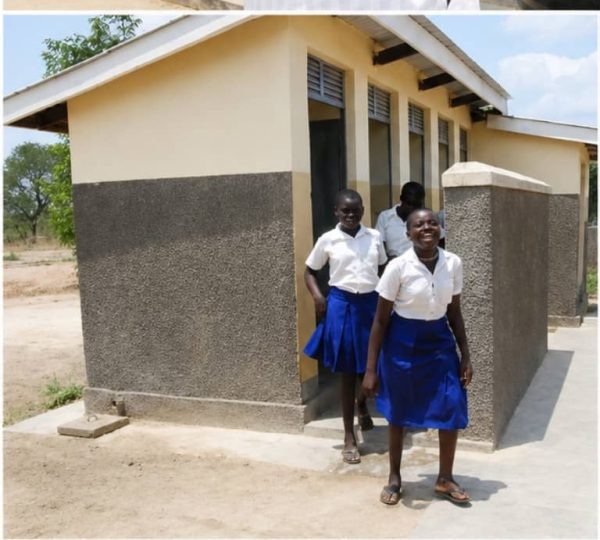
In Arua,some primary school pupils who were using bushes for open defecation in refugee camps abandoned the act after PAG constructed a set of modern latrines with washrooms in their school premises.
When the students were forced to resort to open defecation, the most affected were the girls, as many of them feared to go to the bushes to ease themselves, according to Ms Joyce Candiru, the Senior Woman Teacher of Katiku primary school, a beneficiary school.
Ms Candiru said the intervention of (PAG) had saved the students in the school, especially the girls, from the indignity of resorting to the disconcerting open defecation.
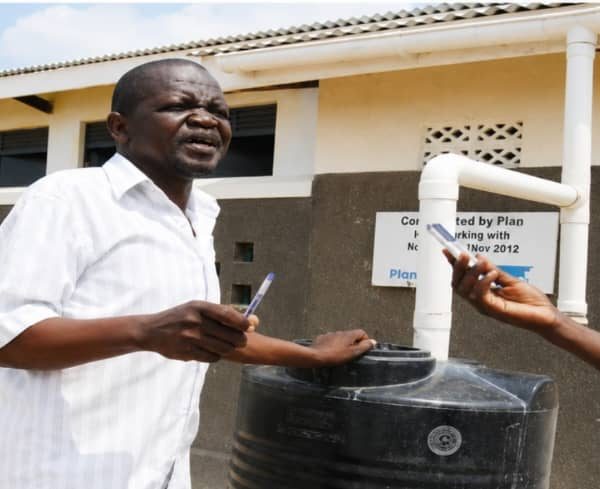
“Before PAG came in, we were also using a temporary toilet that got broken and children were unable to use that. So they were going to help themselves in the bushes,” she said. “We are glad that we now have a latrine with washrooms for girls.”
She added that the bathroom helps them when they are in their menstrual periods and they get water which they use for bathing.
“Some girls feared to go to bushes and we had a great drop out of girls because of lack of a latrine, Some girls returned to school after hearing that a latrine and bathroom were constructed. Said Mrs. Candiru”.
One of the female pupils who is benefitting from the new latrine facilities, Yar Boi, a primary five pupil at Katiku primary school, said there was no privacy in the bushes since some of the mischievous boys often followed the girls there which made them very uncomfortable.
Before the construction of the new latrines, Katiku Primary School had only one latrine, which catered for only boys and the girls, whose hygiene needed better and more numerous lavatory facilities, were reduced to using either bushes or “mobile toilets” (defecating in polythene bags).
According to statistics provided by authorities at Katiku primary school, there are 232 female refugees and 75 female nationals in the school, which brings the total to 307 girls.
On the other hand, there are 290 male refugees and 96 Ugandan nationals, totaling up to 386 boys.
The head teacher of the school, Alfred Onen, conceded in an interview that the sanitation facilities at Katiku were in an alarming state before the intervention of PAG.
Onen added that the problem of construction of latrines in the school was compounded by the poor soil texture that is sandy.
“Sometimes when we tried to construct a latrine, the soils would collapse. But we thank PAG for saving us with construction of a better latrine because since it was constructed three years ago, we have not had any issues,” he said.
PAG Fixes The Only Bore Hole In Rhino Camp
For many years, Ms Christine Night had to trek two kilometers each cold morning to look for water from a spring well. She would then spend three hours waiting for water because of the long queues at the well.
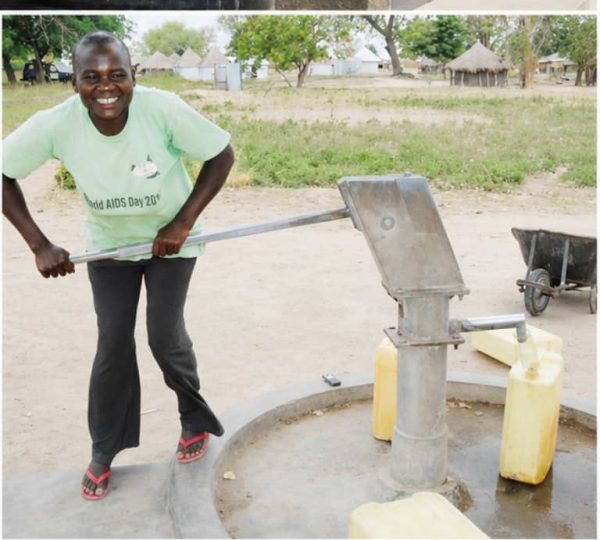
But now, Night’s burden has been lessened after the intervention of PAG which repaired the camp’s only borehole that serves 300 family households.
“I and other women had to wake up early in the morning when it is dark and cold to get water from the well. It was not easy because sometimes we feared that we could be attacked on the way,” said Night.
“The line alone at the well also caused fights among the women,” she recounted.
Sometimes, because of other competing demands at home she would be forced to forego bathing her children or washing her family’s clothes.
Yet, according to Night, even the water she would fetch from the well was usually unsafe and unclean because it was muddied by humans and livestock.
This exposed her family, which lives at Ocea A settlement camp, to the risk of contracting water borne diseases like cholera, dysentery and typhoid.
“Right now, this borehole that was repaired by PAG has saved the women from trekking long distances and wasting time waiting for water. Things are now much better,” she said, with a smile.
The borehole helps both the refugees and the host communities.
Source
Originally published in ARISE & SHINE Magazine, Water & Sanitation Section, Pages 34–35.
