
THE GLOBAL HIV AND AIDS EPIDEMIC ESTIMATES
The first AIDS case was diagnosed in 1981 in the United States of America and the disease has since spread to epidemic proportions around the world. According to the 2010 UNAIDS Report on the Global AIDS epidemic, 33.3 million people were living with HIV, 2.6 million were newly infected, and 1.8 million died from AIDS related illnesses.
HIV and AIDS Epidemiological Trends in Uganda
Uganda was among the first hard hit countries. The first HIV and AIDS case was identified in the country along the shores of Lake Victoria in 1982. Superstition and witchcraft characterized the initial response in communities amidst lack of clear government response to HIV and AIDS. Consequently, the epidemic progressed very fast to all parts of the country initially concentrating in urban and semi-urban centres.
The Uganda Ministry of Health announced in August 2012, that the HIV incidence in the country has risen to 6.7%. At this figure approximately two million people in Uganda are infected with HIV in a total population of 33 million. In 2005, the infected population was just 1.1 million. At the last zero-Behavioral Survey of 2004/05, HIV prevalence was at 6.4% in adults. Women, urban dwellers and residents of the post conflict northern Uganda region were more affected. Uganda last had a downward decline trend in HIV prevalence from a peak of 18% in 1992 to 6.1% in 2002 before it stabilized at 6.4%. The new survey now shows the widowed with the highest incidence, followed by the divorced, then the married/cohabiting and the never married coming last.
It is clear from this trend that Uganda has sustained some impressive response to the HIV and AIDS epidemic grounded in the multi-sectoral approach. However, HIV/AIDS continues to be a major socio-economic challenge and is among the leading causes of morbidity and mortality.
Impact of HIV&AIDS
In Uganda HIV and AIDS has affected both rural and urban dwellers, adults and children and the impacts cut across regions and groups and occupational groups in the country with varying magnitude. HIV/AIDS, especially in resource-constrained setting, results in physical and psychological suffering of the infected and eventually, the affected.
Potential and contribution of the Church in control of HIV&AIDS prevalence
The Church is a giant rooted in the community with great potential to control HIV/AIDS prevalence. Churches and church-based organizations have access to millions of people in Uganda every Sunday and other days in the week. The Church made a significant contribution to Uganda’s achievement in reversing HIV/AIDS prevalence from 18% in 1992 to 6.4% in 2004. PAG, with its 5000 Churches played a key role in Uganda’s effort to control HIV and AIDS.
HIV and AIDS interventions in PAG:
PAG’s Program strategies for HIV&AIDS focus on prevention and care for the infected and affected. The prevention component targets the different age groups. Voluntary Counseling and Testing is conducted in the community. Care is provided to the people living with HIV&AIDS and their households. The care component addresses the socio-economic needs of the individuals and their households. PAG provides information, referral services, and, in some cases, makes connections for people living with HIV & AIDS to access treatment from organizations handling that service.
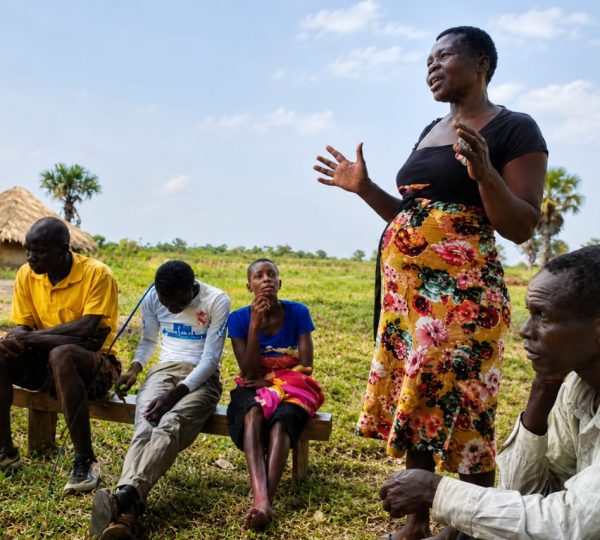
An HIV Positive lady’s Hope was restored
Acen Caroline, 33 years, a resident of Kayei Landing Site, lives positively. When she went for HIV testing with her husband, they were found HIV positive.
She says, “I lost hope. I thought I was useless and could not even have children. This is when the HIV project came to our church and we started doing Bible studies. Through the Bible studies, I discovered I could still live a normal and happy life.
“I then decided to trust God and live positively. I went to the health worker in my community to get more information about how I could live positively, and they explained to me how I could have healthy children and live happy and healthy. So I decided to have more children because I had only one.
“Today I am happy I have a healthy baby girl free of HIV. I am so happy for the CCT & HIV teaching that opened my eyes, brought hope to me and transformed my life.”
I have now registered with Elimination of Mother to Child Transmission of HIV (EMTCT) services, and I get advice often from them. My future plans are to empower others to know their HIV status, open up, disclose and live positively.
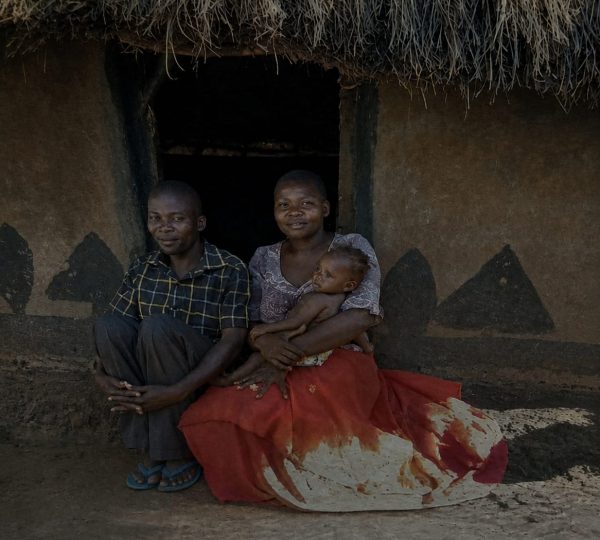
Caroline with her six month old baby and the husband
Ayen Nighty Cannot Hide the Joy of Carrying Her Healthy Twins
She thanks God for PAG and St James Gerald Cross UK, who brought the HIV project that has given them hope, and now they are having healthy children free of HIV.
She discovered she had HIV in 2009. She has been on ARVs and has four healthy children. Unfortunately, her husband refused to go for HIV testing, so the pastor and other Christians are giving this family support and counselling so that the husband will also go and test.
Ayen has already given her life to Christ, but her husband has not yet. She preaches to her husband so that one day he will also give his life to Jesus Christ.
