Elder Mary Obuda’s Legacy
The Enduring Legacy of Elder Mary Obuda
“She has done a beautiful thing to Me.” — Mark 14:6
The story of Elder Mary Obuda and the church she helped establish in Soroti is much more than the story of a building. It is a testimony of faith through adversity, sacrifice in service, perseverance through the years, and a vision for God’s house that refused to die. It is the story of a widow who encountered profound personal loss but chose to continue trusting, serving, giving, and building for the glory of God.
A Life Tested by Loss
Mary became a widow after losing her husband during the Teso insurgency of the 1980s. She was left with the demanding responsibility of raising her children without her husband beside her. In the midst of grief and uncertainty, she had to become both the nurturer of her family and the bearer of responsibilities that circumstances had unexpectedly placed upon her.
Yet the loss of her husband was not to be the last tragedy she would face.
Years later, Mary’s son-in-law was killed, leaving her daughter pregnant with their fourth child and responsible for three other children. Tragedy struck again when Mary’s daughter died during childbirth.
Once more, Mary found herself standing in the painful place where grief and responsibility met. She now had to help care for the newborn baby, her own children, and the three grandchildren who had lost both father and mother.
Afetr years of educationg these grandchildren and her last born daughter Sarah, she tries to settle down in life. Just four years ago she receices information Sarah had been knock by a speeding motor cycle and died instantly. Shuttered so badly. Again she gathered herself to keep the vision to completion.
Her family had experienced loss upon loss. Yet sorrow did not extinguish her faith.
A Vision Born in Adversity
It was within these difficult circumstances that another story was unfolding in Mary’s heart. She carried a deep desire to see a Pentecostal Assemblies of God church established in her community.
This vision was not born in a season of abundance. Mary did not possess great financial resources or material wealth. What she possessed was something deeper: faith in God, commitment to His work, determination to persevere, and a conviction that her community needed a house where people could worship God and hear His Word.
The vision became a calling, and the calling demanded sacrifice.
For more than ten years, Mary laboured toward its fulfilment. She sold chickens, goats, and cows, contributing what she could toward the work. She appealed to pastors, friends, and others who shared the burden of seeing a church established in the area.
The sanctuary did not rise in a day. It grew gradually—through prayer, sacrifice, relationships, generosity, perseverance, and the contributions of those who joined the vision.
Mary’s resources may have been limited, but her faithfulness was not.
When Sorrow Becomes Service
Perhaps one of the strongest messages from Mary’s life is that she refused to allow what she had lost to determine what she could still give to God.
She could have allowed bereavement to close her heart. She could have concluded that caring for her family and grandchildren was already more than enough responsibility. Instead, while carrying the burdens of her family, she continued carrying a burden for God’s house.
Her suffering therefore did not become the conclusion of her story. By God’s grace, sorrow became service, hardship produced perseverance, and perseverance helped sustain a vision that would bless many others.
Her testimony reflects the truth of Galatians 6:9:
“Let us not become weary in doing good, for at the proper time we will reap a harvest if we do not give up.”
The Vision Becomes a House of Worship
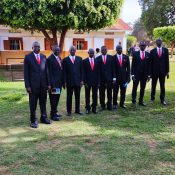
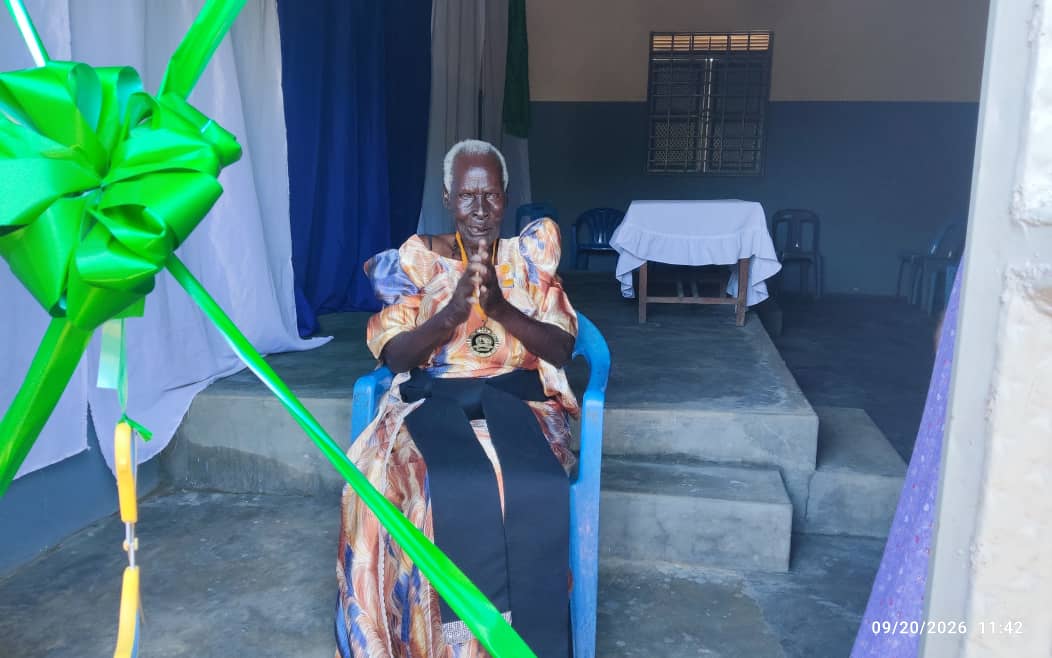
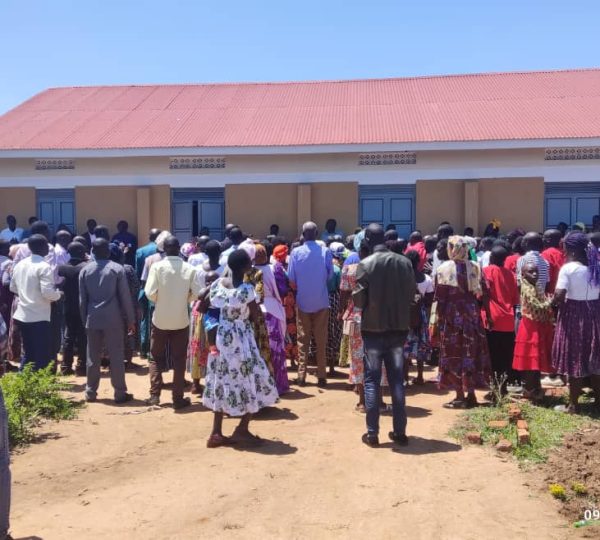
On 22 September 2026, more than a decade of prayer, giving, sacrifice, and perseverance reached a significant milestone when the Presiding Bishop of PAG Uganda, Rev. Dr. Simon Peter Emiau, dedicated the completed church in Soroti to the service and glory of God.
For Elder Mary, this was far more than the dedication of a physical structure.
It represented the fulfilment of a vision that had survived bereavement, family responsibility, economic limitation, and the passing of many years. What had once existed as a burden in the heart of a widow had become a house in which generations could gather to worship God.
The sanctuary therefore stands as both a house of worship and a monument of faithfulness.
Mary Among the Biblical Witnesses of Faith
Mary’s testimony finds meaningful parallels in the lives of faithful widows recorded in Scripture.
The widow of Zarephath possessed very little when Elijah came to her during famine. Yet in the midst of scarcity, she responded in faith and shared from the little she possessed (1 Kings 17:8–16). Her story demonstrates that biblical generosity is not measured merely by how much a person possesses, but by the faith with which that person entrusts what they have to God.
Anna the prophetess knew the pain of widowhood, yet her loss did not separate her from devotion to God. Luke records that she continued worshiping, fasting, and praying, and in the fullness of time she became one of those who recognized and testified concerning the infant Jesus (Luke 2:36–38). Her widowhood became a season of deeper devotion rather than spiritual withdrawal.
Jesus also drew His disciples’ attention to the widow who placed two small coins into the temple treasury (Mark 12:41–44). Others gave from abundance; she gave sacrificially from her poverty. Christ saw not merely the amount placed in the treasury, but the heart behind the offering.
These biblical women demonstrate a common spiritual principle: circumstances may reduce what is in a person’s hands without reducing what God can accomplish through a surrendered heart.
Elder Mary Obuda’s testimony carries that same enduring message.
Her Work Still Speaks
Mary has known the pain of losing a husband, a son-in-law, and a daughter. She has carried the responsibility of children and grandchildren. She has experienced seasons when resources were limited. Yet through these circumstances, she continued to believe, serve, give, and build.
Today, she remains the bearer of the vision God placed upon her heart more than a decade ago. Remarkably, after all she has endured, she remains a woman of joy.
Her life gives fresh meaning to the words of Nehemiah 8:10:
“The joy of the LORD is your strength.”
Her testimony also recalls the biblical declaration:
“Blessed are the dead who die in the Lord from now on… they will rest from their labor, for their deeds will follow them.” — Revelation 14:13
Faithful work has a voice beyond the moment in which it is performed. Buildings may be made of bricks, timber, iron, and cement, but the testimony behind them is built from faith, obedience, sacrifice, perseverance, prayer, and grace.
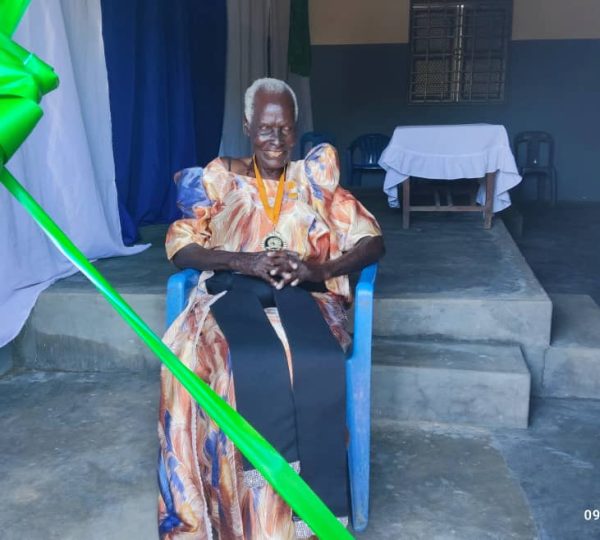
Elder Mary Obuda
A Sanctuary and a Legacy
The church in Soroti therefore stands for something greater than its physical walls. It is a testimony that faith can outlive adversity, generosity can rise out of limited resources, perseverance can carry a vision across many years, and God’s grace can turn personal pain into service that blesses a community.
Every prayer offered there, every person who comes to Christ, every child taught the Word of God, every family strengthened, every minister raised, and every generation that worships within that sanctuary will extend the influence of a vision that once lived quietly in the heart of a widow.
Elder Mary Obuda teaches us that one does not need to possess everything before beginning something for God. Sometimes God begins with what appears small—a burden in the heart, a willing hand, a chicken, a goat, a cow, a prayer, an act of sacrifice—and through years of faithfulness He builds something that becomes greater than the person who began it.
Her life therefore leaves the Church with four enduring lessons:
Faith sees what God can do.
She believed before the sanctuary stood.
Sacrifice gives toward what faith sees.
She gave from the resources available to her.
Perseverance continues when fulfillment takes longer than expected.
For more than a decade, she refused to abandon the vision.
Legacy begins when personal faithfulness becomes a blessing to future generations.
The sanctuary now belongs to a worshiping community whose ministry can continue long beyond the sacrifices that established it.
A Tribute of Gratitude
We thank God for Elder Mary Obuda—for her faith in adversity, her generosity in limitation, her perseverance through sorrow, and her enduring commitment to the house and work of God.
We also acknowledge the pastors, believers, friends, family members, and well-wishers who responded to the vision and contributed toward bringing the sanctuary to completion. The finished house demonstrates what God can accomplish when individual conviction becomes shared Kingdom labour.
The dedication of this church is therefore not simply the conclusion of a building project. It is the beginning of another generation’s responsibility.
Those who inherit this sanctuary must now preserve the spiritual purpose for which it was built. Let its pulpit faithfully proclaim Christ. Let its altar remain a place of prayer. Let its congregation become a community of disciples. Let its doors welcome those who need the Gospel. And let future generations remember that this house was raised through faith, sacrifice, perseverance, and the grace of God.
Elder Mary Obuda’s work speaks.
Her sacrifice speaks.
Her perseverance speaks.
And the house she helped build now stands to declare:
God remains faithful, and a life faithfully surrendered to Him can leave a testimony that continues to speak from generation to generation.
And your calling should not remain only a vision in your heart. Rise in faith. Obey the call. Use what is in your hands. Persevere through the seasons. Finish your assignment. Leave a testimony that still speaks.